The short answer
Check the date before saving a period start, and keep any uncertain or different bleeding observation separate. You can correct the journal later without inventing a complete history at setup.
Your first day of period tracking does not need to begin with a perfect memory of the last six months. It can begin with one date you know and a clear distinction between something you observed and something you are estimating.
That distinction becomes important later, when an app counts days from a saved start or calculates intervals between starts. A confident-looking date is not automatically an accurate one.
Before you tap Save
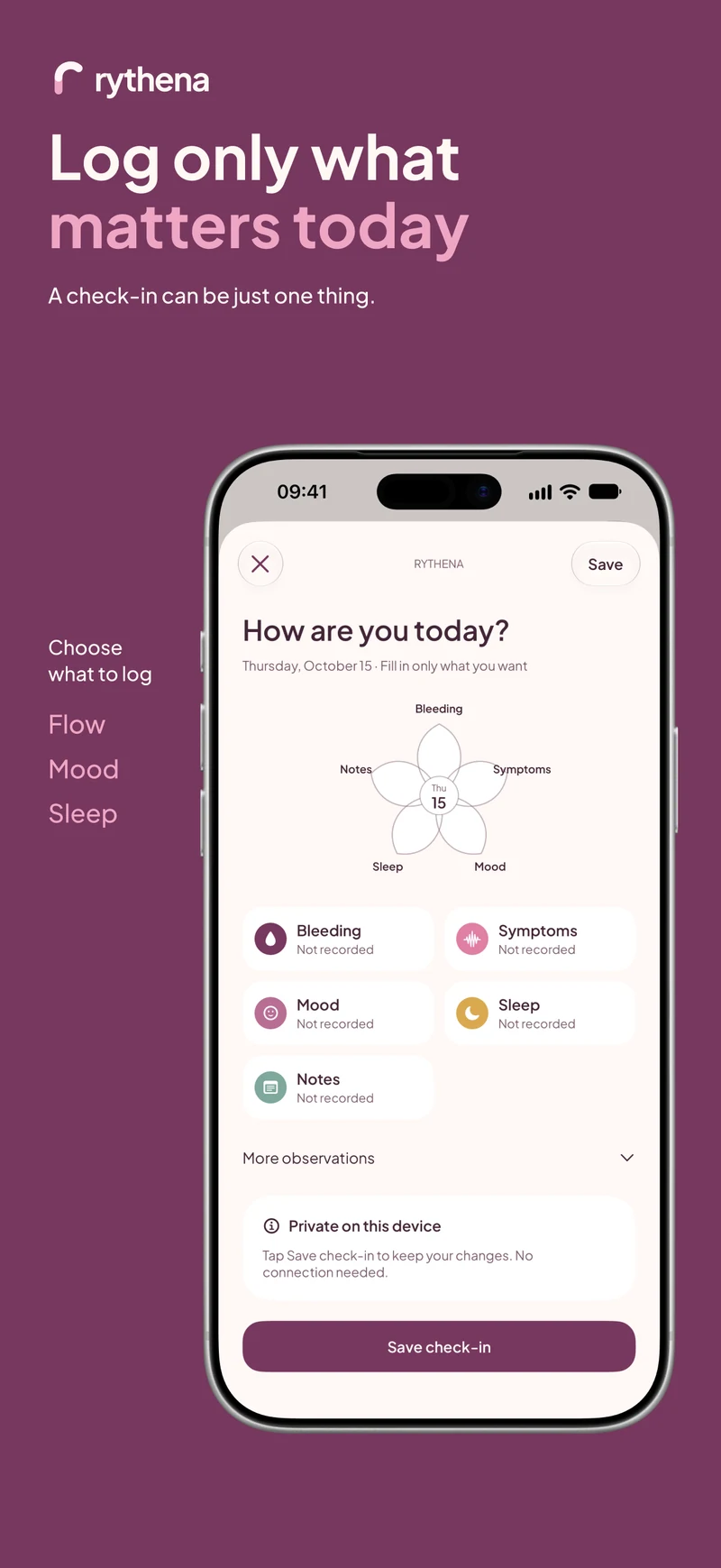
Check whether the screen is showing today, yesterday or an older date you selected in Calendar. This sounds basic, but a correct observation saved on the wrong day can be hard to notice once it becomes part of an average.
Then check what you are recording. A Start period action opens an episode. A flow or spotting observation describes a day. A last-period setup answer provides background for an early estimate. These are related, but they are not interchangeable records.
What if you are not sure what to call the bleeding?
Use the observation that best describes what you actually know. Do not mark a definite period start solely because the app would otherwise have no forecast. If a distinction matters to your care and you are unsure, ask a healthcare professional rather than using the app's preferred label as an answer.
You can still keep a factual note for yourself. “Not sure whether this is my period” preserves something useful without claiming a certainty you do not have. Keep that private wording separate from information you choose to share.
Setup does not have to manufacture a history
Rythena's upcoming onboarding allows optional last-period and usual-length answers. They help the app begin with useful context, but leaving an unknown answer blank is valid.
If you do provide a setup date, inspect how it is labelled. It should not appear to be a set of daily observations you never saved. Later records can add more information without erasing the distinction between a setup answer and an observed event.
Starting today does not mean ending today
If the period is ongoing, use Start period and leave the episode open. The current period-day counter can advance without requiring a new start every day.
Use End period when you know the actual last day. If you are entering a completed older period, supply its real end. Skipping tomorrow's check-in should not make the app assume the period lasted just one day.
Make the next visit simpler
Choose one small action you expect to repeat: checking the day counter, saving a mood or recording a symptom. You can expand later if a new question makes another category useful.
An accurate beginning is more valuable than a crowded beginning. See how to track your period with less logging, cycle length versus period length and understanding early estimates for the next steps.
Sources & product basis
Product steps checked against Rythena’s upcoming iOS implementation and listing. Examples are illustrative. AI-assisted writing; no clinical sign-off. Sources checked 2 November 2026. Editorial approach and corrections.
Make it a smaller routine.
See the app, check what stays free and choose the tools that help you.