
Choose a word that describes your actual experience, not a mood expected from a cycle phase. Specific labels and frequent-choice ordering can make a short check-in more useful.
A mood journal for period tracking should have room for a day that feels restless, excited, tense or mixed. If none of a small set of broad labels fits, choosing one anyway can make the diary feel less like your experience.
The upcoming Rythena picker combines a larger vocabulary with illustrations and frequent-use ordering. The aim is to make choosing easier without pretending that the app knows what you feel.
Similar words can describe different days
“Excited” may feel pleasant; “restless” may describe an inability to settle. “Irritable” is not necessarily the same as “tense.” You do not need a formal definition for each word, but consistency in your own use makes a later review more meaningful.
Ask yourself what you want to remember about today. If a broad label is enough, use it. If a more specific label fits, choose it. There is no reward for selecting the most intense word.
Let the artwork help you navigate
An illustration is a visual shortcut. The written label remains the clearest reference for what you are saving, especially if a facial expression could be interpreted in several ways.
If you selected the wrong card because the expression looked familiar, change it before saving. Accessibility labels and readable text matter because artwork alone cannot carry the full meaning of a mood choice.
Frequent ordering is a shortcut, not a verdict
Repeatedly used moods can move toward the front so you do not have to scan the whole list every time. That ordering reflects use. It is not a personality assessment or a cycle-phase prediction.
A familiar front-row choice should still fit the current day. If it does not, take a moment to pick another. A quick interface is useful only when it makes an honest observation easier to save.
Remember the final save
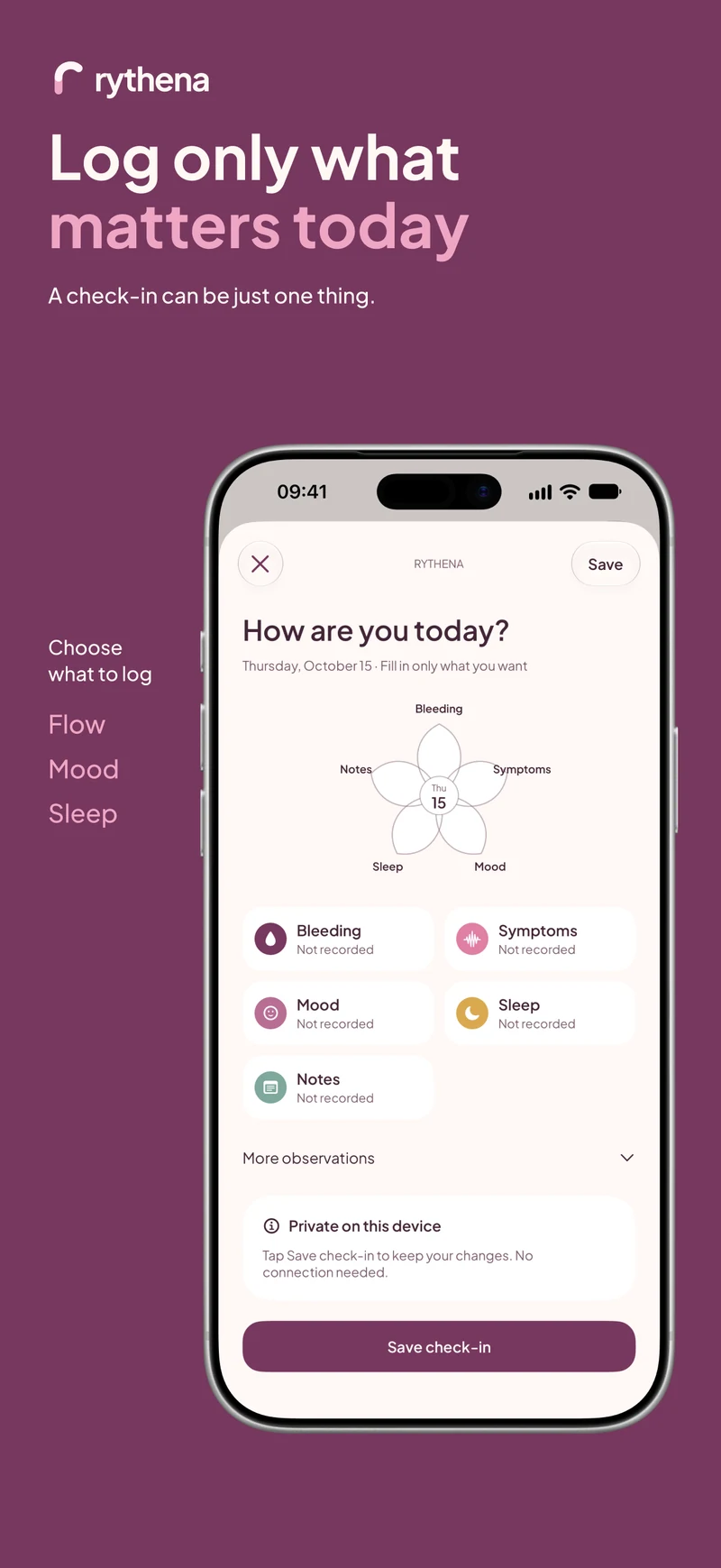
In Rythena, enter Mood from the check-in, choose the card and use Done to return. Then save the check-in. A selected item in an editor is not necessarily a saved journal record yet.
This matters if you share today's saved mood with a partner. Draft selections, future observations and private notes should not appear merely because you explored a picker. Check the saved day when it is important to know what was recorded.
Read patterns without reducing yourself to them
A month of mood records can help you remember differences you would otherwise forget. It does not prove that a cycle phase caused a feeling or that someone else can predict your behavior from your calendar.
Bring your own context to the review. You are allowed to feel differently from any general phase story. The period mood tracker guide explains the app controls; patterns without assumptions explains how to read the result with care.
Sources & product basis
Product steps checked against Rythena’s upcoming iOS implementation and listing. Examples are illustrative. AI-assisted writing; no clinical sign-off. Sources checked 2 November 2026. Editorial approach and corrections.
Make it a smaller routine.
See the app, check what stays free and choose the tools that help you.
Explore upcoming Rythena