The short answer
Save the dates, the flow description and practical effects you actually observed. Do not treat an app label or the number of products used as an exact blood-loss measurement or diagnosis.
Heavy period tracking is useful when it helps you explain what has changed or how bleeding affects your day. It is less useful if it turns an ordinary check-in into a claim that the app measured blood loss precisely.
The upcoming Rythena journal keeps period boundaries and individual flow observations distinct. You can save an episode and add the detail that matters without completing every category.
Begin with the dates you know
Use Start period for an ongoing episode and End period when you know the actual last day. If you add an older completed period, check both boundaries before saving it.
Missing a daily log should not end the episode, and an expected duration should not automatically close it. This helps distinguish a real long episode from a journal that only appears short because you did not open the app every day.
Describe the practical experience
You might want to remember a leak, an interrupted activity or a need to change plans. Use factual wording rather than selecting a severe label solely because it seems more likely to attract attention.
If you record period-product use, keep the description clear. Different products and habits make counts difficult to compare. Do not convert those counts into a precise blood-volume number unless a suitable clinical method actually supports that measurement.
Keep flow labels consistent
A label such as light or heavy is an observation in your journal, not a diagnosis. Think about how you are using the term from one entry to the next, and add a short clarification when it would otherwise be ambiguous.
You can correct a mistaken selection. Do not remove a truthful difficult day because it makes your pattern look different from an expected calendar. The aim is to preserve the experience you want to discuss.
Know when the record should support a conversation
The NHS notes that heavy periods can affect daily life and recommends seeing a GP when they do, when they have continued for some time, or when there is severe pain or bleeding between periods or after sex. Other symptoms may also need assessment.
Rythena cannot establish a cause from a saved flow label. If you feel seriously unwell or need urgent help, use an appropriate local healthcare service rather than waiting for a report or another app notification.
Prepare a clear summary
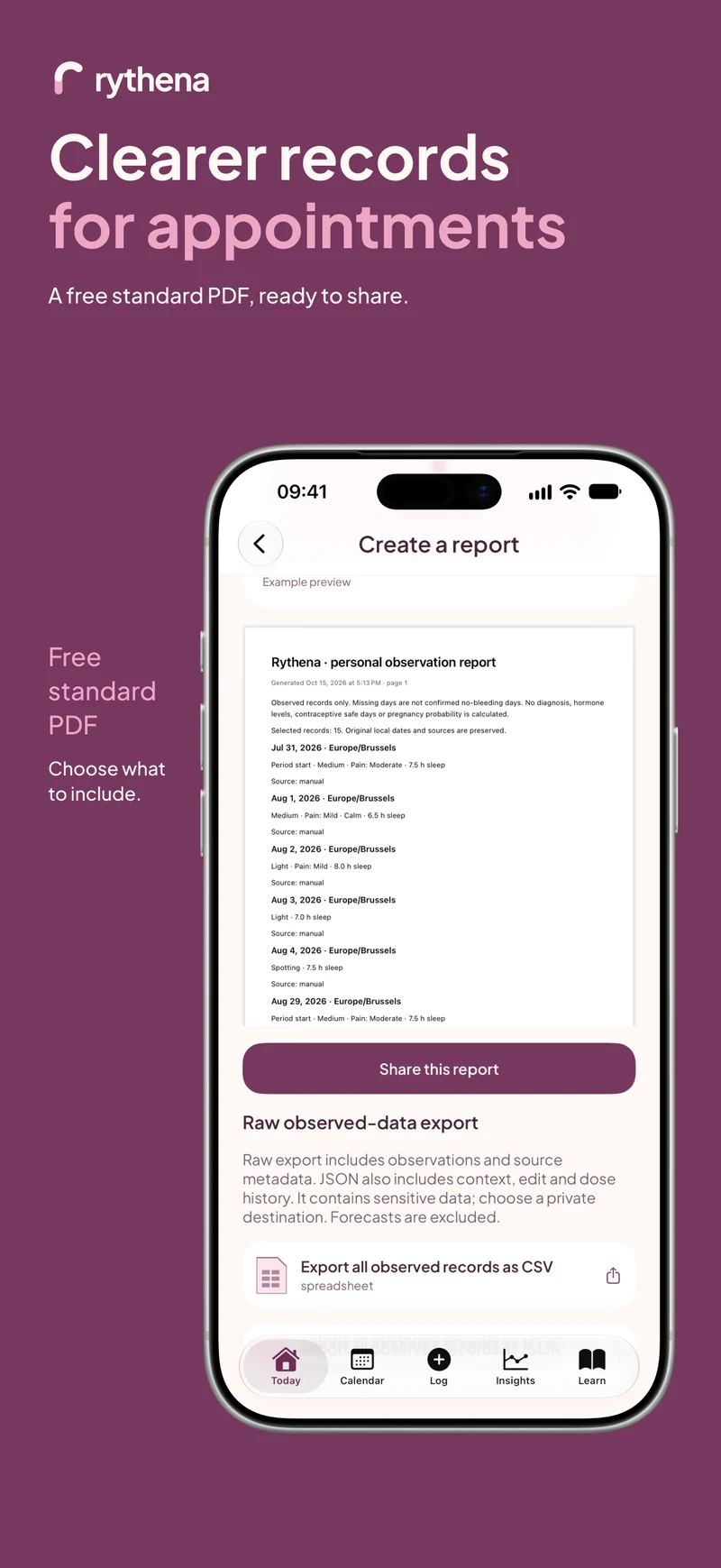
Choose a relevant date span, create the free standard PDF and inspect the output. Check the episode dates and which observations appear. Add your main question in your own words rather than expecting a chart to speak for the whole experience.
Share the file only through a destination you choose and understand. The protected journal does not automatically protect every exported copy afterward.
For app steps, see the period-tracking report guide. For a lighter ongoing routine, read how to track your period and the ongoing-period counter.
Sources & product basis
Product steps checked against Rythena’s upcoming iOS implementation and listing. Examples are illustrative. AI-assisted writing; no clinical sign-off. Sources checked 2 November 2026. Editorial approach and corrections.
Make it a smaller routine.
See the app, check what stays free and choose the tools that help you.